Struggling With Oily and Acne-Prone Skin? You’re Not Alone
If you struggle with oily skin and frequent breakouts, you know how frustrating it can feel. One day your skin seems manageable, and the next you’re dealing with excess shine, clogged pores, and unexpected pimples. For many people, oily and acne-prone skin can feel like a constant battle.
The good news is that you’re far from alone—and with the right understanding and routine, clearer and healthier skin is absolutely possible.
Why Oily and Acne-Prone Skin Happens
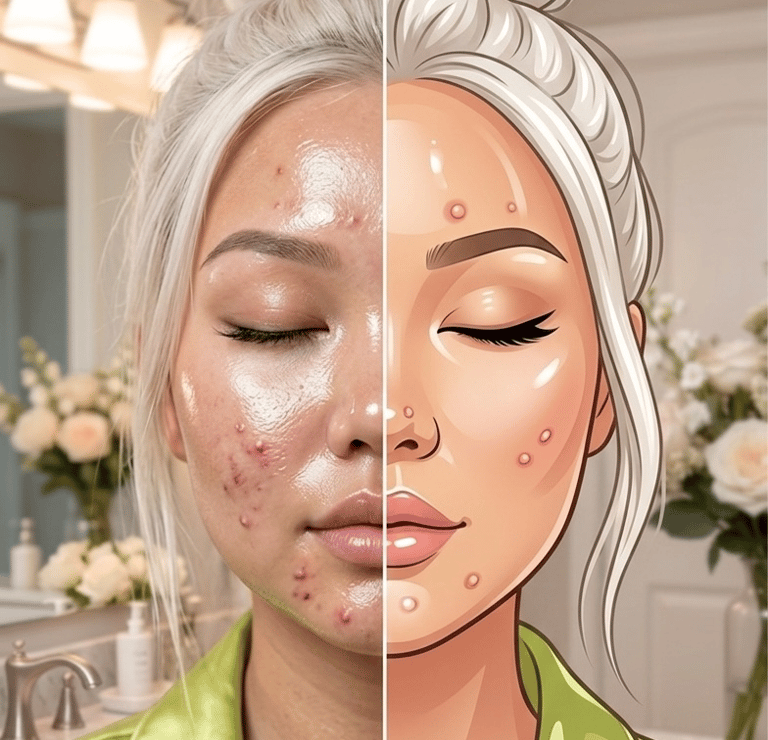
Oily skin occurs when your sebaceous glands produce too much sebum, the natural oil that protects and moisturizes the skin. While sebum is important for healthy skin, too much of it can mix with dead skin cells and clog pores. When pores become clogged, acne can form.
Several factors can contribute to oily and acne-prone skin, including:
Hormonal changes
Hormones can stimulate oil production, which is why breakouts often occur during teenage years, stress, or hormonal fluctuations.
Genetics
If oily skin runs in your family, your skin may naturally produce more oil.
Using the wrong skincare products
Heavy creams or pore-clogging ingredients can worsen breakouts and increase oiliness.
Over-washing or over-drying your skin
Many people try to remove oil aggressively, but stripping the skin can actually trigger even more oil production.
Understanding these triggers can help you choose the right routine for your skin.
Signs Your Skin May Be Oily and Acne-Prone
You may notice some of these common signs:
• Shiny skin, especially in the T-zone (forehead, nose, and chin)
• Enlarged or visible pores
• Frequent blackheads or whiteheads
• Breakouts that appear regularly
• Makeup that slides off throughout the day
Recognizing your skin type is the first step toward treating it properly.
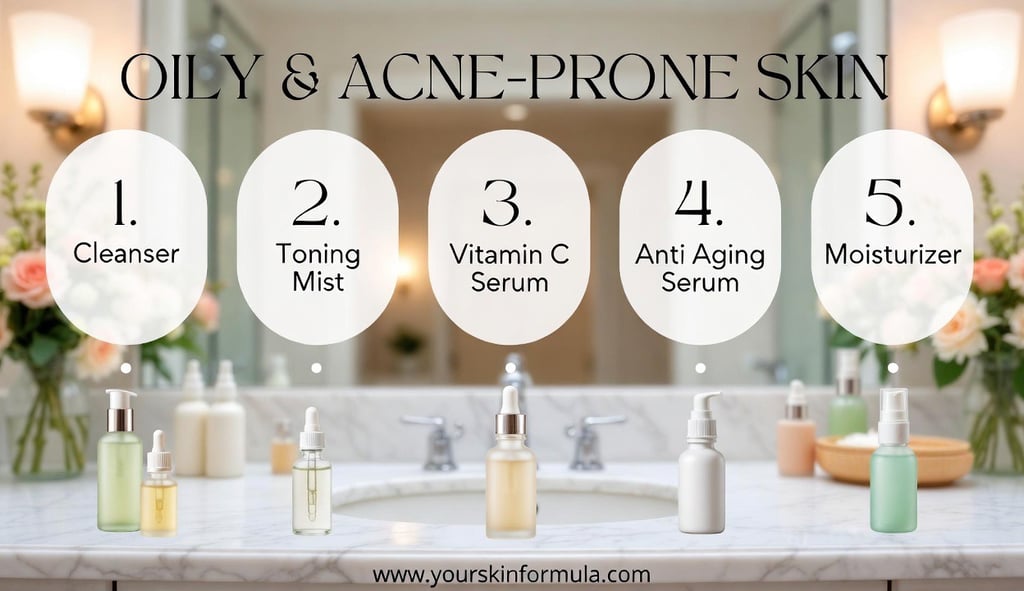
Here is a Simple Routine for
Oily and Acne-Prone Skin
Managing oily skin isn’t about eliminating oil completely. The goal is to balance oil production while keeping the skin healthy and hydrated.
1. Cleanse Gently Twice a Day
Use a gentle cleanser designed for oily or acne-prone skin to remove excess oil, dirt, and bacteria without stripping your skin.
Avoid harsh scrubs or overly drying cleansers that leave your skin feeling tight.
2. Exfoliate to Prevent Clogged Pores
Exfoliating helps remove dead skin cells that can trap oil inside pores.
Chemical exfoliants like salicylic acid or glycolic acid are often helpful for acne-prone skin because they penetrate pores and help keep them clear.
Limit exfoliation to 2–3 times per week to avoid irritation.
3. Use Targeted Acne Treatments
Acne treatments work by reducing bacteria, unclogging pores, and calming inflammation.
Common acne-fighting ingredients include:
• Salicylic acid
• Benzoyl peroxide
• Retinoids
• Niacinamide
Consistency is key when using treatment products.
4. Moisturize—Even if Your Skin Is Oily
Skipping moisturizer is one of the most common mistakes people make.
When skin becomes dehydrated, it often responds by producing more oil, which can worsen breakouts.
Look for lightweight, non-comedogenic moisturizers that hydrate without clogging pores.
5. Protect Your Skin With Sunscreen
Sun exposure can irritate acne and lead to dark marks after breakouts heal.
Choose a lightweight sunscreen that won’t clog pores and apply it daily.
Helpful Habits for Clearer Skin
Small daily habits can make a big difference in managing oily and acne-prone skin.
Try to:
• Avoid touching your face frequently
• Change pillowcases regularly
• Remove makeup before bed
• Clean makeup brushes often
• Manage stress levels when possible
These simple steps can help reduce bacteria and prevent clogged pores.
Be Patient With Your Skin
Clear skin rarely happens overnight. Most skincare routines take several weeks of consistent use before noticeable improvements appear.
Instead of trying too many products at once, focus on building a simple routine and giving your skin time to adjust.
Struggling with oily and acne-prone skin can feel overwhelming, but it’s a very common experience. With the right balance of cleansing, exfoliation, treatment, and hydration, your skin can gradually become clearer and healthier.
Remember, healthy skin isn’t about perfection—it’s about learning what works best for your skin and treating it with care and consistency.
In the tab below,
I’ve included some high quality skincare products specifically recommended for oily and acne-prone skin. These are premium, dermatologist-favored products that help reduce excess oil, unclog pores, calm breakouts, and keep skin hydrated without causing more acne.
Furthermore, you will also find budget-friendly skincare products that work well for oily and acne-prone skin. These drugstore staples focus on ingredients dermatologists commonly recommend—salicylic acid, benzoyl peroxide, niacinamide, and retinoids—which help unclog pores, control oil, and reduce breakouts.